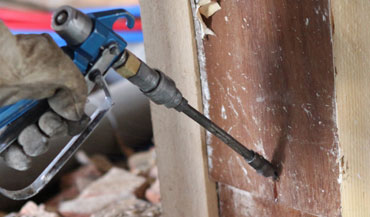
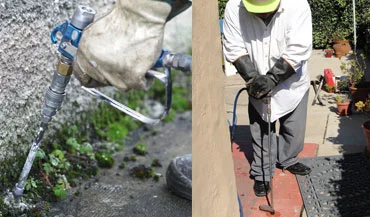
Depending on accessibility, local spot treatments are effective at eradicating small isolated infestations of termites. After a complete inspection of your home is completed, our licensed termite inspectors will advise you of the areas of termite infestation in your home and the type of treatment best suited to the structure. License To Kill offers both full structure tent fumigation as a primary recommendation, or secondary local treatments. License To Kill offers a control service agreement for either fumigation or secondary treatment that can be continued after the initial warranty period.

There many alternative secondary termite treatment methods; liquid nitrogen, microwaves, electricity and residual termiticides. In some situations, such as controlling Subterranean termites, repellent termiticides are the only choice for continuing control. Repellent termiticides provide a continuous repellent barrier which prevents termites from entering the structure. Repellent termiticides do not last indefinitely and will require re-treatment when the soil is disturbed.
Non-repellent termiticides are a recent addition to License To Kill’s termite protection plans. This new concept of termite control allows termites to penetrate treated areas where they contact the active termiticide. The termiticide is then carried on the termite’s body into the colony, spreading to other termites like a virus. Foam applications are used to treat voids in foundation walls, behind brick veneer, under slabs and porches.
Termiticide baits can eliminate colonies around structures. Baits contain several different active ingredients; however, this technique does not immediately stop termite foraging activity within the structure.
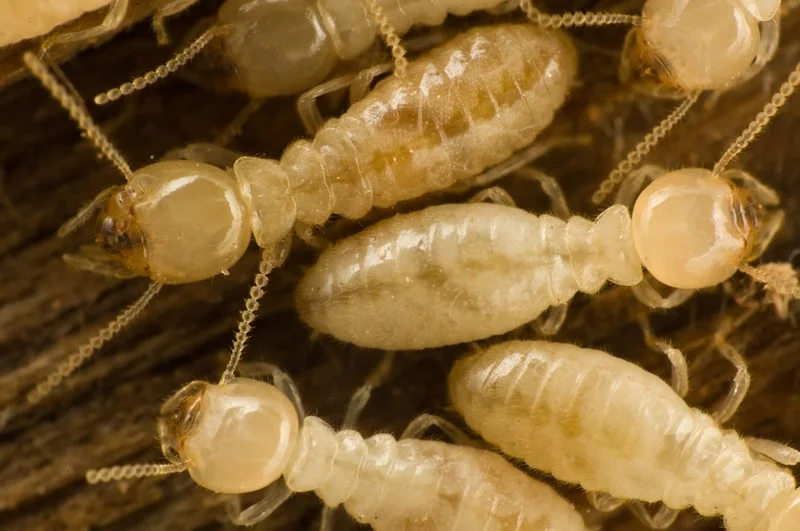
Subterranean termites require different types of treatments because they nest in the ground, in what is known as a crown colony. These crown colonies infest structures from a distance, setting up satellite termite colonies. To kill subterranean termites, we use combination of structural and soil treatments. These treatments eliminate termites within the structure and form a protective barrier around the structure keeping them out.
Evidence of Subterranean termites can be found in sub-areas, baseboards, and attics. Subterranean termites will also enter the home through expansion joints or cracks in the cement slab. The effectiveness of a Subterranean termite treatment depends on a thorough termite inspection. Make sure your Subterranean termites don’t return, call us.


Subterranean termites require moisture to survive and are typically found coming in through the base of the structure.
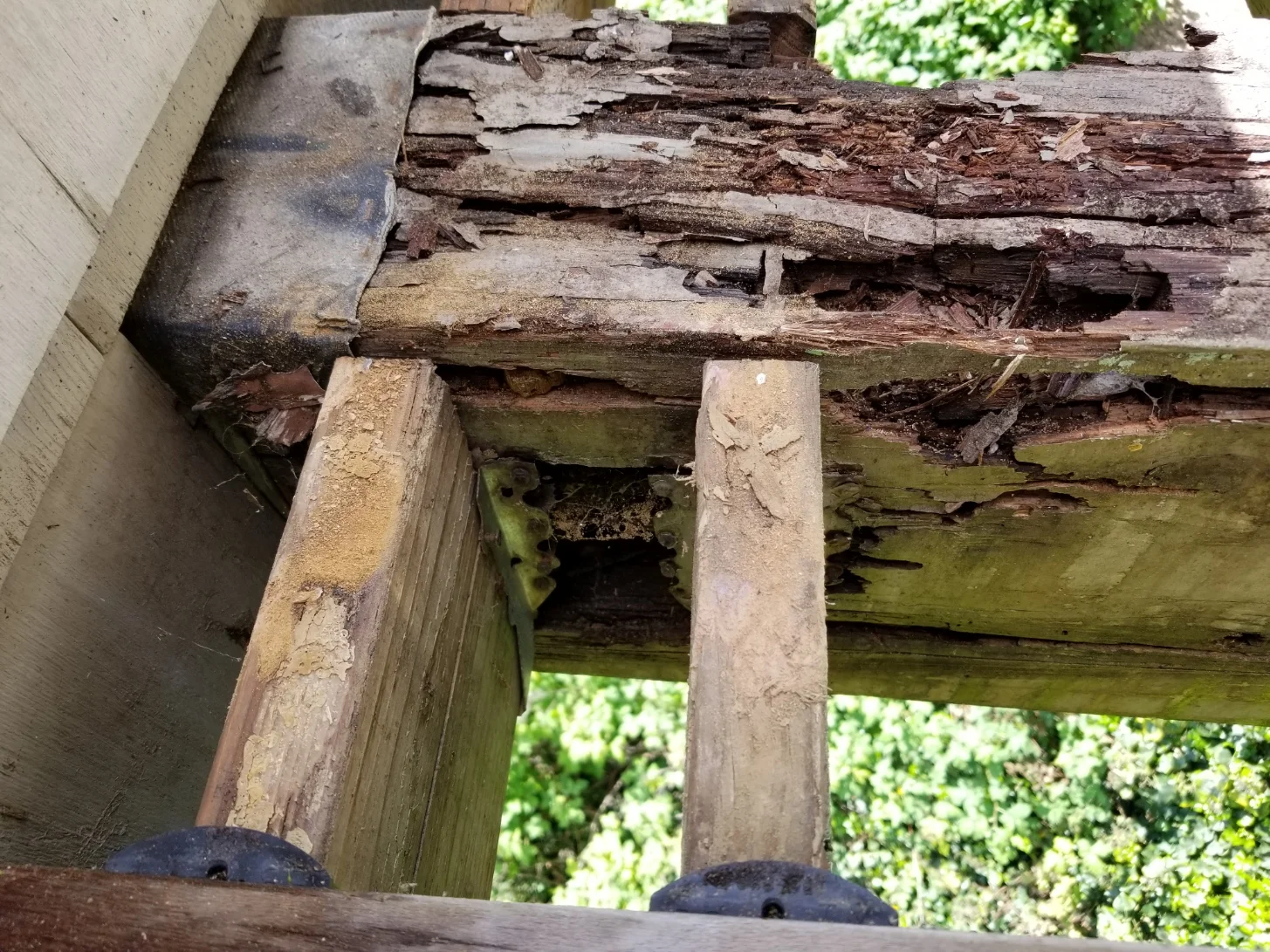
Fungus or dry rot produce spores, which are like tiny seeds that are distributed by wind and water.
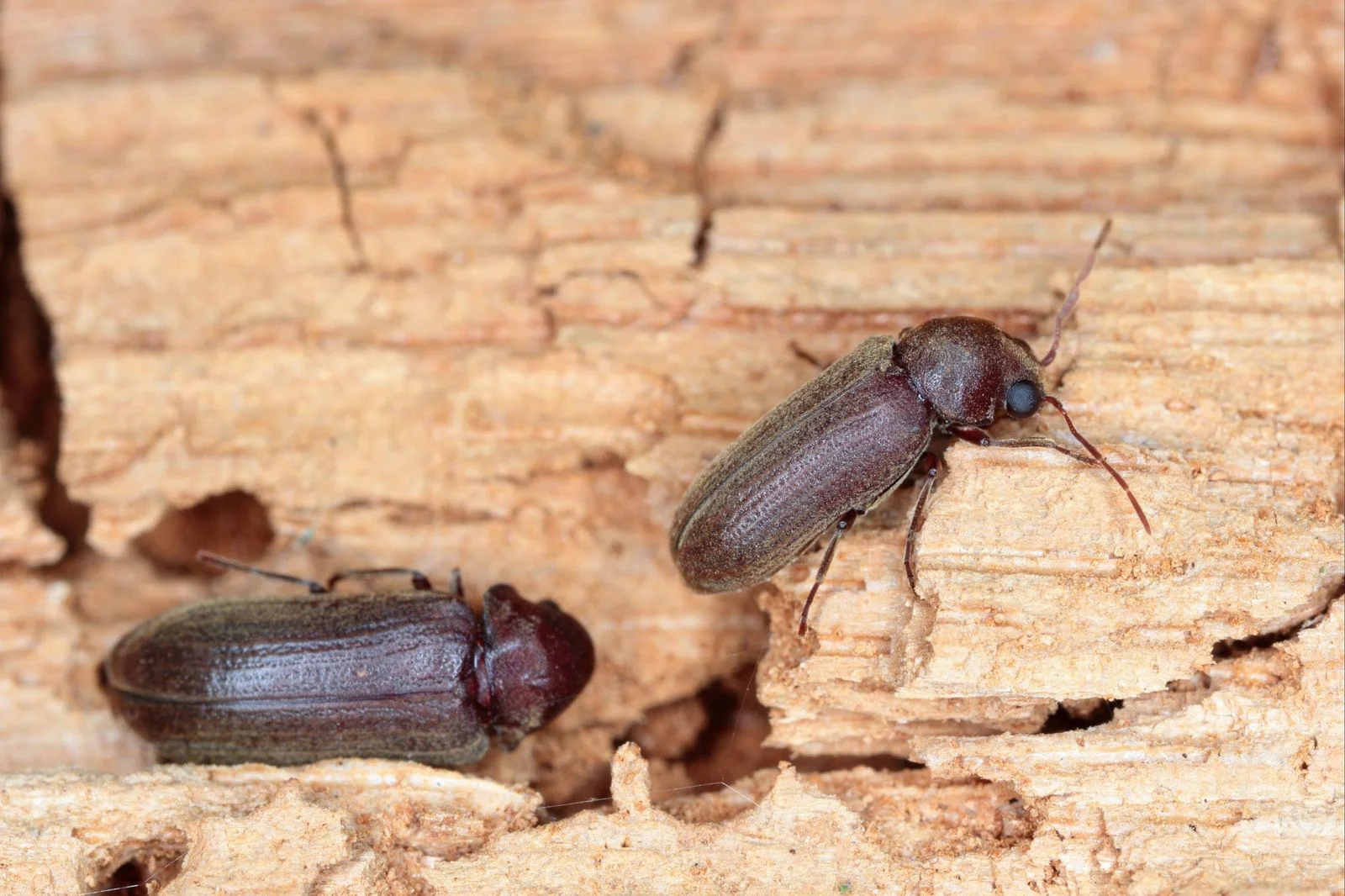
Wood boring beetles lay their eggs in wood and commonly damage wood facing.
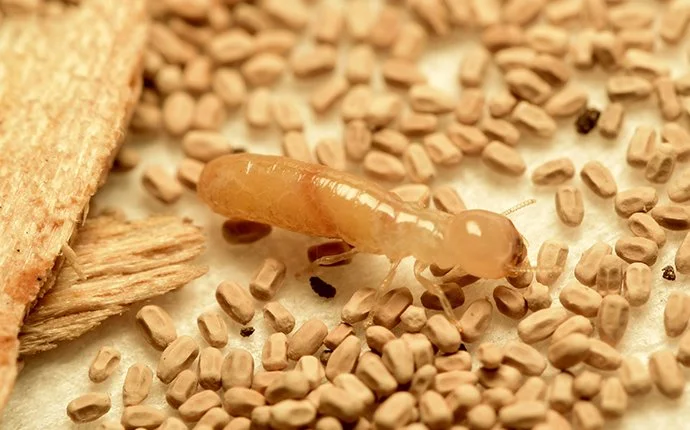
Drywood termites prefer to infest dry wood and are commonly found in walls and attics.
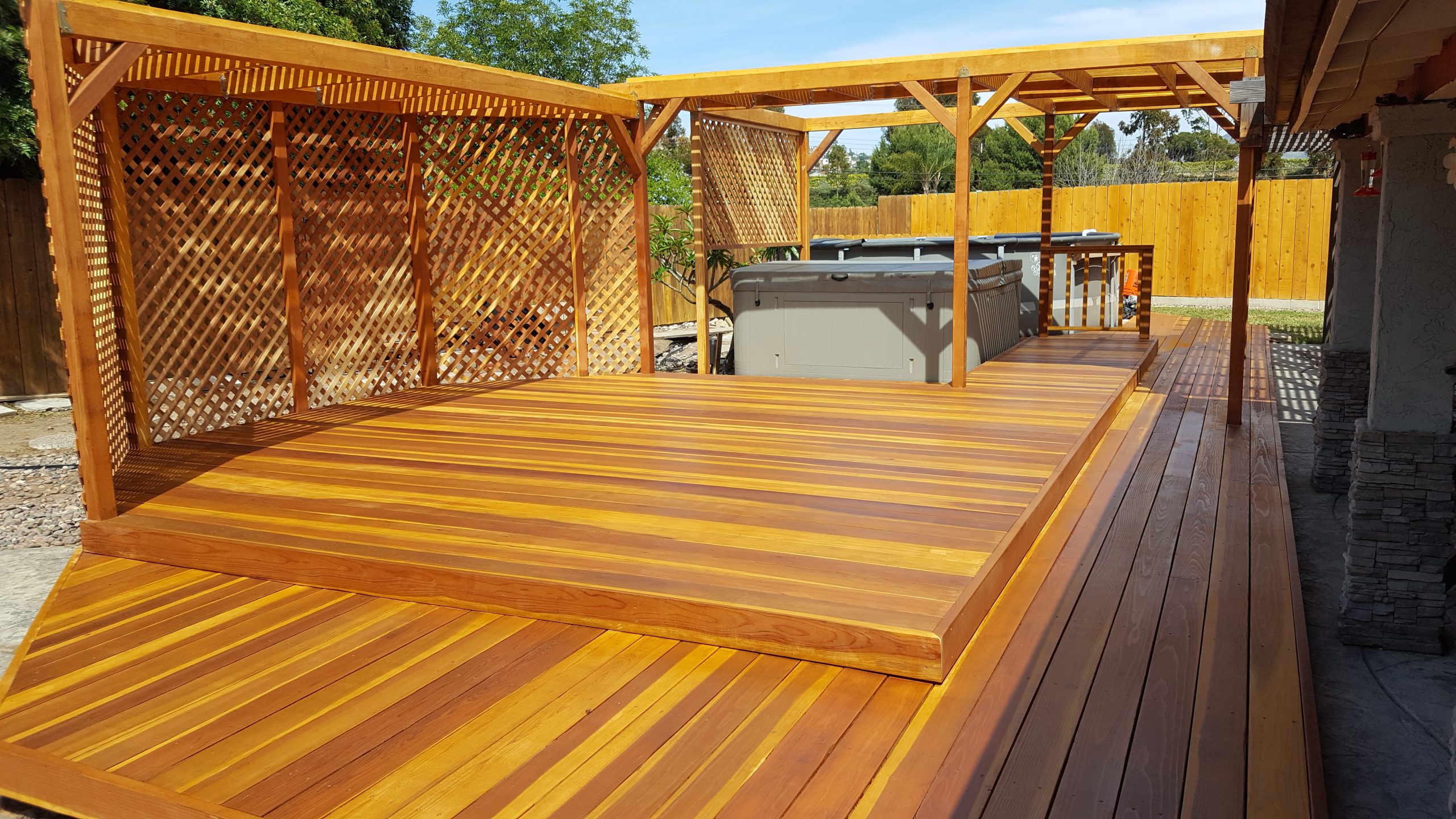
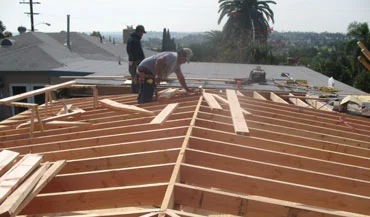
After your home is free of termites, we can also provide termite wood damage repair for any damaged wood left behind. We are licensed by the Contractors State License Board to perform quality structural repairs. Our in-house construction department is staffed with specialists who can restore the integrity and appearance of your home.
For lasting protection, we offer renewable guarantees on any of our termite services to protect your home from termites for years to come.


All of our employees are fully state licensed, bonded and undergo thorough federal background checks before visiting you.

Every pest control, rodent removal and termite treatment we offer comes with a 100% satisfaction guarantee.

We're a San Diego local, Christian family owned and operated business with active military, veteran and senior discounts.